

Ask the trainer
When an off leash dog charges toward you: how to stay safe and protect your dog
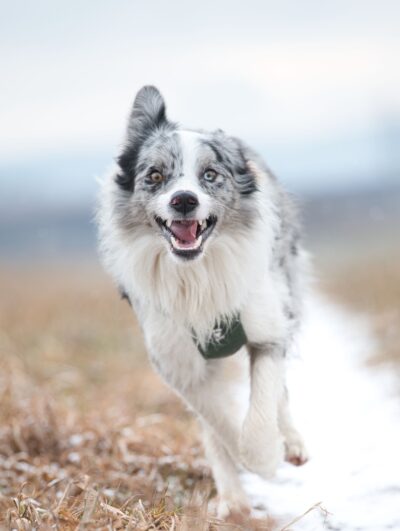
Photo credit: Michal Petras via pexels.com
Many of us who live with dogs have experienced that gut‑wrenching moment when an off‑leash dog suddenly appears and comes barreling toward us. In an instant, adrenaline surges. Your heart pounds, your muscles tense and your breath catches as you brace for what might happen next. In the distance, you may see a human calling out without success. Then comes the familiar shout — “Don’t worry, my dog is friendly!” — a reassurance of intent that does nothing to reduce the very real risk to both dogs. And sometimes there isn’t a human in sight at all and the dog charging toward you looks intent on reaching your dog with the clear potential for conflict.
When this happens, our response can either stabilize the situation or unintentionally escalate it. Knowing what to do is not about overreacting, it’s about safety for everyone involved.
Why you need a plan
Before we talk about what to do, it’s important to understand why doing something matters.
When an unfamiliar dog approaches at speed, the guardian often tries to reassure you by describing their dog’s intent. But what matters is the impact.
Your dog is on leash. Your dog cannot move away, greet properly or offer natural appeasement signals. Your dog cannot assess or respond freely.
And the approaching dog — often racing forward with no ability to read subtle signals — may not see or respect your dog’s communication anyway. This sudden, unpredictable and often frightening event can have long‑lasting emotional and behavioural consequences.
The risks are real:
- Physical injury to either dog or the humans involved.
- Increased fear or reactivity in already sensitive dogs.
- Significant setbacks for puppies in their socialization period.
- Legal and safety implications for the off‑leash dog’s guardian.
- Emotional trauma that can alter future behaviour.
And of course, sometimes dogs are simply at large by accident. Things happen. But the impact on your dog is the same.
What you should do
1. Stay calm
This is the foundation of everything that follows.
When we panic, we shift into a reactive, survival‑mode state. Our muscles tense, our breathing changes and we tighten the leash, all signals that can escalate the approaching dog’s arousal and increase the risk of conflict.
When you stay calm:
- You remain connected to the thinking part of your brain.
- You make clearer, safer decisions.
- Your dog sees you taking charge.
- Your confidence helps your dog feel protected.
Calm guardians prevent more incidents than any tool ever will.
2. Read the approaching dog
Understanding body language allows you to quickly assess risk.
If the approaching dog looks like this:
- Loose in the body
- Soft in the face
- Approaching with a moderate, wiggly gait
- Tail wagging low to mid‑height
This dog is likely curious, not confrontational.
If the approaching dog is coming towards you like this:
- Racing forward with high arousal
- Leaning forward with intensity
- Tail high and stiff
- Mouth tight
- Eyes locked in
The dog may not intend harm, but the impact on your leashed dog can still trigger a stress response. Remember: your dog cannot respond naturally while restrained.
3. Use distance and barriers
Distance is your best friend. Move behind:
- A fence
- A parked car
- A tree
- A doorway
- Any object that breaks the direct line of sight
If no barrier is available, an umbrella can be an excellent tool. Acclimate your dog to the sound and movement of it opening at home. A large umbrella can act as a visual block and a physical shield, allowing you to keep the approaching dog on the other side while you and your dog stay protected.
4. Use food as a distraction
Always carry treats. If a dog approaches, toss a handful of treats directly at the dog’s face. The sudden appearance of food often interrupts forward motion and redirects the dog’s attention long enough for you to move away safely.
5. Carry non-harmful deterrents
For emergencies, you can carry humane deterrents:
- A small air horn
- A Pet Corrector‑style compressed air sound
- A water or citronella spray (last resort only)
These tools are not meant to punish. They are meant to interrupt. Build a toolkit that aligns with your comfort level and your dog’s needs.
What you should NOT do
These actions can escalate the situation and increase risk:
- Do not panic.
- Do not scream or flail. Sudden movement increases arousal.
- Do not run. This triggers chase instinct.
- Do not tighten the leash. Leash tension increases your dog’s stress and can provoke a reaction.
- Do not look away. Always keep the approaching dog in sight.
- Do not reach between dogs. Even your own dog may bite in a moment of high arousal.
Your safety matters just as much as your dog’s.
Practice your plan
Once you know what to do, practice it.
Rehearse scenarios in your mind. Practice positioning your dog behind you or between your legs. Practice opening your umbrella quickly. Practice tossing treats with accuracy.
This type of mental and physical rehearsal, called cognitive rehearsal, is well-documented in emergency response research. People who rehearse are less likely to panic, freeze or make unsafe decisions. Their plan activates automatically when needed. This is how people appear “heroic” in emergencies. They prepared.
This all may sound scary, but not every off‑leash encounter ends badly. When we stay calm, read the situation accurately and respond with intention, we dramatically reduce risk.
- Keep your leash loose.
- Don’t assume the approaching dog has bad intentions.
- Learn to read body language.
- Practice your emergency plan until it becomes second nature.
Your walk with your dog should be peaceful and enriching. As your dog’s advocate, being prepared for the unexpected can turn a potentially frightening moment into a non‑event.
Stay safe out there.

Written by
Karen Baxter, CDBC, CPDT-KA, Dipl. CBST, FDM
Karen Baxter is a Certified Behaviour Consultant and Trainer, Member of the International Association of Animal Behavior Consultants and owner of Unified K9 Behaviour Centre.

Dogs looking for homes
Without a doubt, a dog is a real friend. Our dogs come in all shapes and sizes and they all have one thing in common — they all need loving forever homes.
Open your heart and home to a rescue dog. You’ll be glad you did.
Meet August’s featured dog – Leo
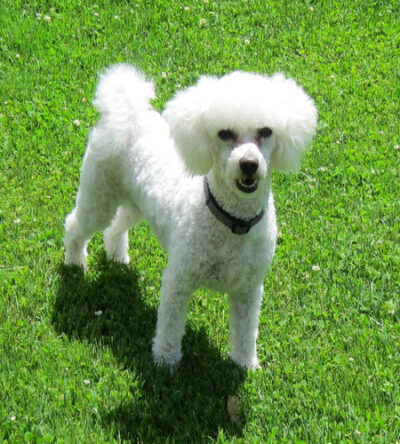
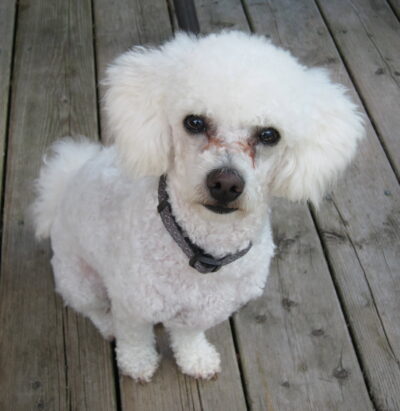
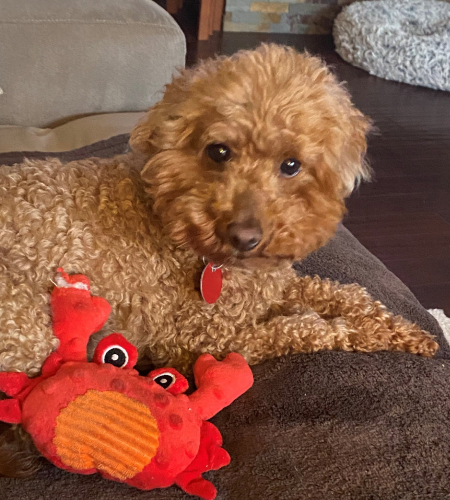
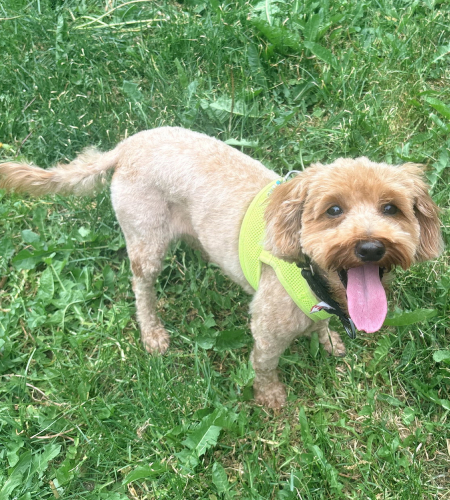
Leo is a clever, affectionate poodle that is approximately two years old and 12 pounds.
He’s living proof that patience and trust can change a life. When Leo first arrived in foster care, he was wary of people and handling him was a challenge. Months later, he now loves curling up on his foster mom’s lap.
Leo thrives on kindness, routine and thoughtful introductions. Once he feels comfortable, he enjoys playing with other friendly dogs and has been wonderful with his puppy foster brother.
While he once barked and lunged at other dogs, Leo has made tremendous progress with both leash manners and reactivity. He can now calmly pass other dogs and even greet them appropriately. He’s also becoming more comfortable around strangers and visitors in his home. Leo still needs time, treats and slow introductions to help him build confidence with new people. But once you’ve given him a treat, he’ll want to be in your lap.
Leo needs a patient adopter who’ll be committed to continuing his training. His foster mom uses a muzzle for nail trims and for handling certain grooming areas like his front paws. In the past, grooming could lead to him nipping or biting, but he is now coping much better and communicating more clearly.
He can still become overly excited during games like fetch and may show some arousal grabbing, but he has made excellent progress learning drop it, wait and ok through positive reinforcement training. He’s also made tremendous strides learning not to ingest items he finds outdoors. He responds well to cues like look and drop it, though supervision is still important. But he will now happily trade the undesired item for a treat.
In the home, Leo is an absolute delight. He’s housetrained, crate-trained, fine when left alone, gentle when taking treats and knows several commands including sit, down, wait, look, bow and recall. He rides beautifully in the car and enjoys adventures, but most of all, he loves being close to his humans. Because he can be vocal, apartment living would not be a good fit. Leo’s ideal home would be with adults only in a house with a securely fenced yard.
Every day brings new successes for little Leo. His journey has been remarkable, and with a patient, understanding family willing to keep building his confidence, he’ll reward them with loyalty, affection and companionship.
If you’re looking for a clever, affectionate and playful dog, Leo might just be your perfect match!


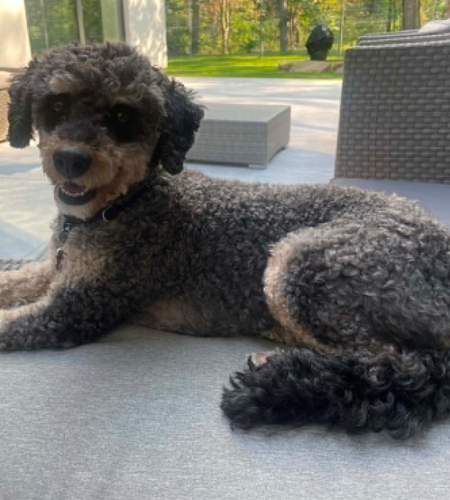






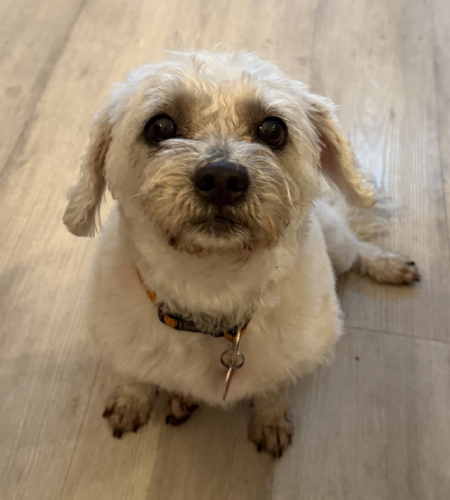
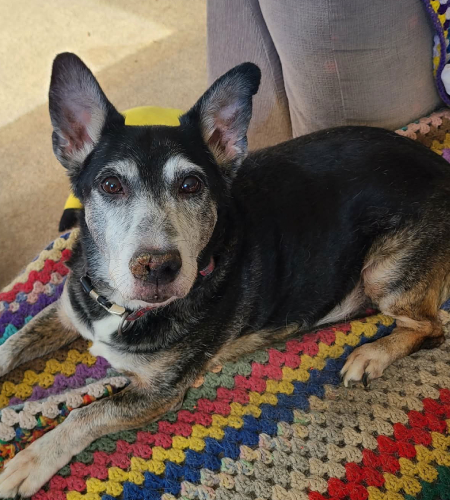

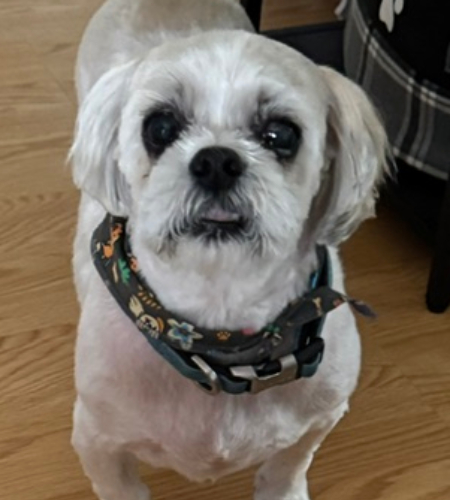
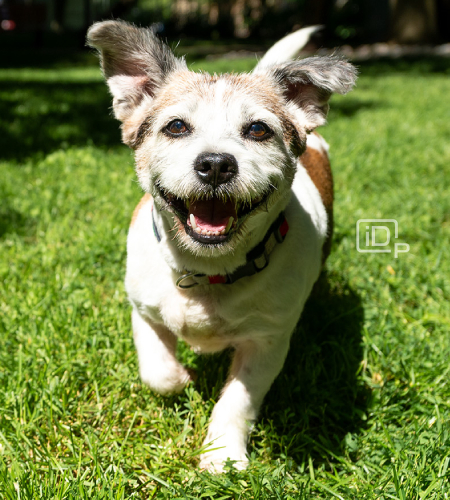
Happy tails (recent adoptions)
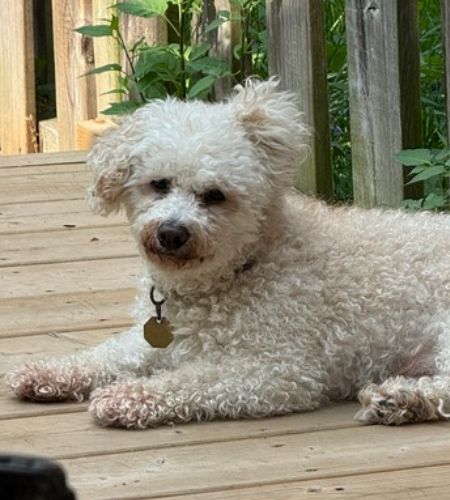
Jude (formerly Dude)
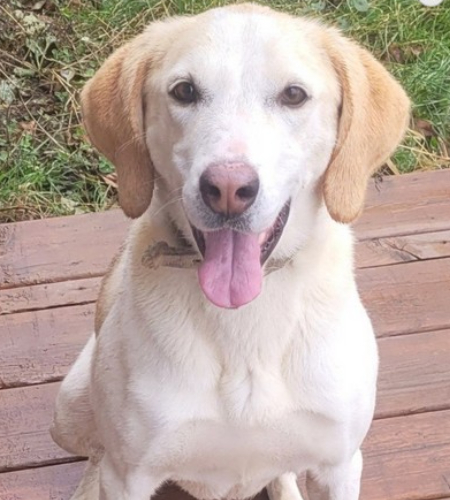
Millie
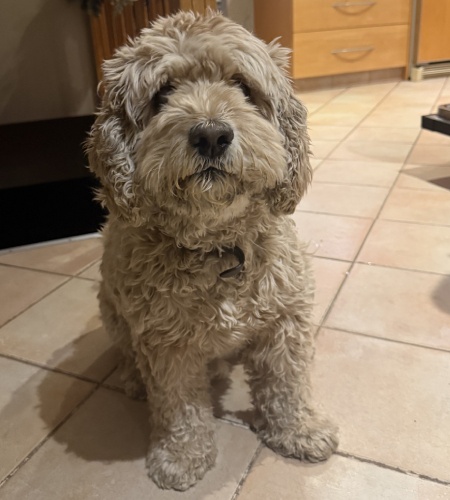
Leo
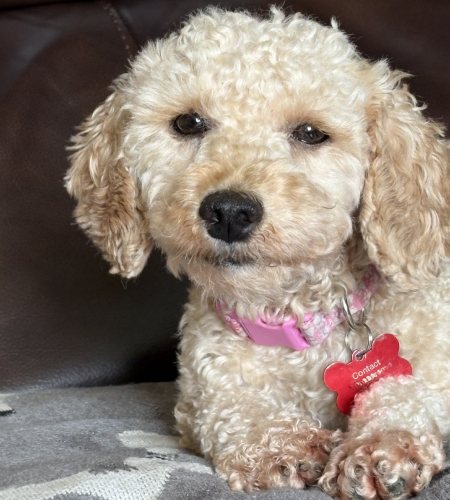
Fran
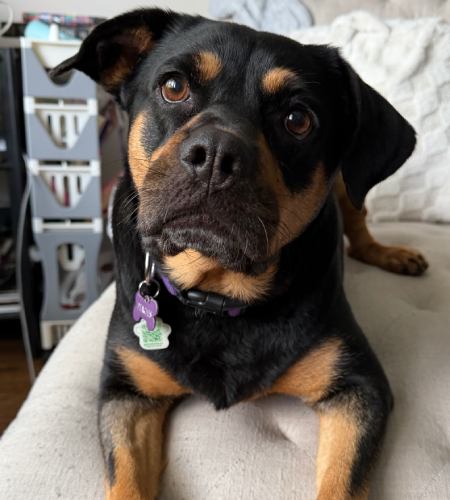
Peaches
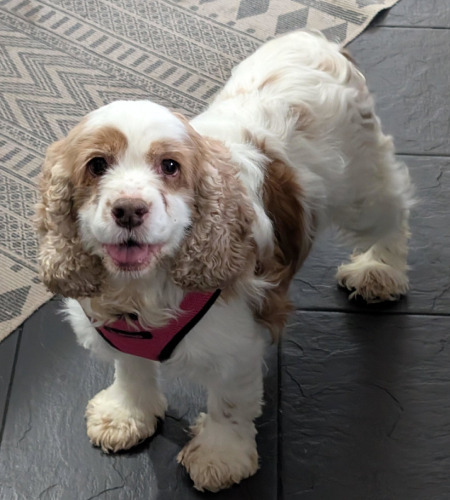
Misty
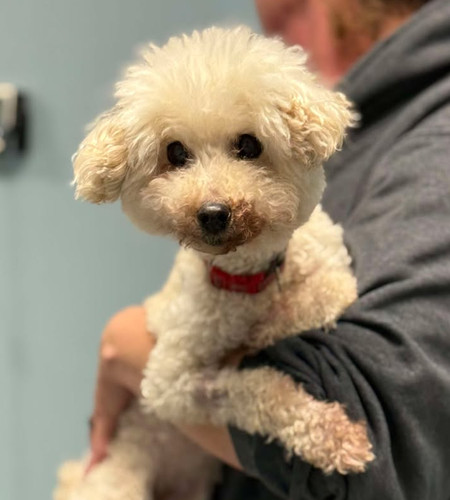
Dream
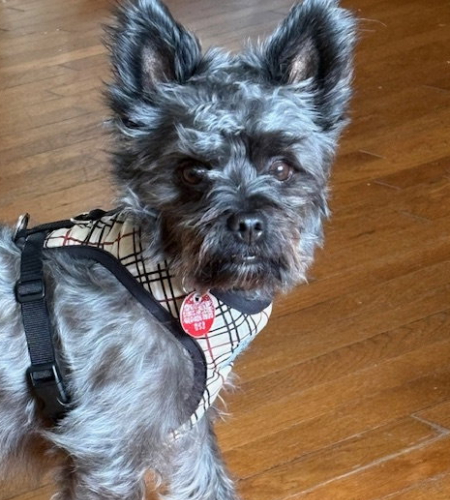
Loki

Suki
Adoption update
Dear Speaking of Dogs Rescue,
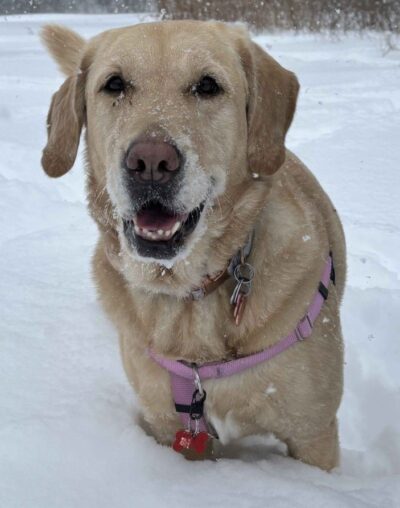
Allie (formerly Alice) is doing really well. At 4.5 years of age, Allie found herself left at a Quebec shelter, likely due to frequent urination, which was determined to be as a result of bladder stones. Speaking of Dogs stepped up, took her in and got her the surgery she needed. It’s now been a year since we adopted her, and we couldn’t imagine life without her. Allie is the third dog we’ve adopted from Speaking of Dogs Rescue. She was the perfect fit for us, and especially for our other dog, Shyla.
Allie loves the snow in winter, and especially loves our pool in the summer. We did have to work on some things with her, namely her lunging and barking at squirrels and other dogs. We’re happy to report that we were able to overcome this with positive reinforcement. We love her so much. We call her our Goofy Girl since she makes us laugh every day.
Thank you, Speaking of Dogs Rescue!
Sincerely,
Kim and Jason White

Want to help our dogs?
Consider making a donation from our Amazon wish list of priority dog supplies.

In memoriam

Buster
Adopted June 2016
Loved by Al, Marissa, Nicholas and Jake
About Speaking of Dogs
Speaking of Dogs Rescue Program is a Canadian registered charity established in the Greater Toronto area with foster homes across Ontario. Launched in 2001, we are a foster-based, all breed rescue with a focus on senior dogs. We are run solely by volunteers with a mission to help homeless dogs in need by providing shelter or sanctuary, necessary medical care, adoption and education.
Newsletter team
Contributors: Lorraine Houston, Kim Gladding and Karen Baxter
Editor and Design: Michelle Colasuonno
Contact
P.O. Box 8058
RPO Hurontario
Collingwood, ON L9Y 0H1
705-444-SODR (7637)
speakingofdogs@gmail.com
speakingofdogs.com
Newsletters
If you no longer want to receive our newsletter, email news@speakingofdogs.com with “unsubscribe” written in the subject line.