

Ask the trainer
Becoming a behaviour detective: what is your dog really trying to tell you?
 “Help! My puppy won’t stop biting.”
“Our dog barks every time someone comes to the door.”
“He jumps on everyone.”
“She’s stubborn.”
If you’ve ever found yourself saying one of these things, you’re certainly not alone.
As a dog trainer, these are the conversations I have every week. Most people come to me wanting to know how to stop a behaviour. It’s understandable. Living with barking, nipping, jumping or pulling on the leash can be frustrating. We love our dogs, but sometimes we simply want peace in our homes.
Early in my career, I focused on finding the best training exercises to change behaviour. Those exercises certainly have their place, but becoming a Licensed Family Dog Mediator® completely changed my perspective.
Instead of asking, “How do we stop this behaviour?” I learned to ask, “What is this behaviour trying to tell us?” That simple shift changed everything.
Whether your dog has been with you since they were eight weeks old or joined your family through a rescue organization, every behaviour tells us something. We may never know every experience that shaped our dogs before they came into our lives, but we can learn an incredible amount by observing the dog standing in front of us today.
Before I suggest a single training exercise, I put on my detective hat. Because every behaviour leaves clues.
The behaviour detective
 Think about detectives in your favourite mystery novel. They don’t arrive at the scene and immediately decide who committed the crime. They gather evidence. They interview witnesses. They look for patterns. Only then do they begin putting the pieces together.
Dogs deserve the same curiosity. When we skip straight to fixing a behaviour, we sometimes miss the reason it exists in the first place. And often, the behaviour isn’t the problem. It’s the clue.
The puppy who wouldn’t stop biting
One family came to me feeling completely overwhelmed by their young puppy. “He bites everything,” they told me. Hands. Pant legs. Shoelaces. Socks. They loved this little puppy, but they were exhausted.
Instead of starting with training, I started asking questions. What does a typical day look like? How much sleep is he getting? What happens between all of those play sessions?
As they described his routine, the picture became clearer. This puppy was constantly busy with walks, play, family and friends visiting, training sessions and evening excitement. He wasn’t getting enough opportunities to simply rest.
Just like young children, puppies need an incredible amount of sleep for their growing brains and bodies. When they become overtired and overstimulated, they often lose the ability to regulate themselves. The result can be zoomies, frantic behaviour, nipping, biting and difficulty settling.
The solution wasn’t more exercise. It wasn’t stricter rules. It was balance. We introduced regular nap times, shorter play sessions, calming activities and opportunities to decompress throughout the day. Within a short time, the family noticed something remarkable — their puppy was finally getting what he needed.
The dog who barked through dinner
Another family reached out because their dog barked whenever visitors arrived and every evening as they sat down for dinner. Their first assumption? “He just wants attention.”
Again, we became detectives. Like so many families today, both pet parents worked full-time. Their mornings were rushed. Their evenings were spent catching up on chores, making dinner and preparing for the next day. Their dog had spent much of the day waiting for interaction, adventure and something meaningful to do.
His barking wasn’t about being difficult. It was communication. Together, we introduced slow sniffy walks, puzzle feeders, food-search games and short training sessions that encouraged him to use his incredible brain and natural instincts.
The transformation wasn’t magical. It was logical. As his days became richer and more fulfilling, his barking gradually decreased. A fulfilled dog has much less reason to shout.
Every behaviour has a story
One of the biggest lessons I’ve learned is this: two dogs can show exactly the same behaviour for completely different reasons.
With a rescue dog, we may never know every experience they had before joining our family and that’s okay. While their history may provide pieces of the puzzle, it’s only one part of the picture. What matters most is the information they’re giving us today.
How do they respond to new people? When do they seem most relaxed? What helps them feel safe? What activities bring them joy? Those observations become some of our most valuable clues.
The more curious we become, the more we can understand what our dogs are communicating — even if we don’t know everything they’ve experienced before coming into our lives.
Looking beyond the behaviour
As a Family Dog Mediator®, I’ve learned to look beyond the obvious. Every dog is influenced by many factors — their inherited traits, their current environment, their unique personality and all the experiences that have shaped them, whether we know those experiences or not.
When we consider the whole dog instead of focusing only on the behaviour, we stop chasing quick fixes and start creating lasting change. That’s when training becomes about more than teaching a dog to sit, stay or come. It becomes about building trust, building confidence and strengthening the relationship we share with our dogs.
The next time your dog frustrates you
Before asking, “How do I stop this?” pause for a moment. Put on your detective hat. Ask yourself, “What is my dog trying to tell me?”
That one question can completely change the conversation. Whether you’ve raised your dog from puppyhood or welcomed a rescue whose history is largely unknown, the goal is the same. Our job isn’t simply to stop the behaviour. Our job is to understand the dog standing in front of us today.
While we can’t always change a dog’s past, we can help shape their future. And to me, that’s where meaningful training and meaningful relationships begin.
Written by
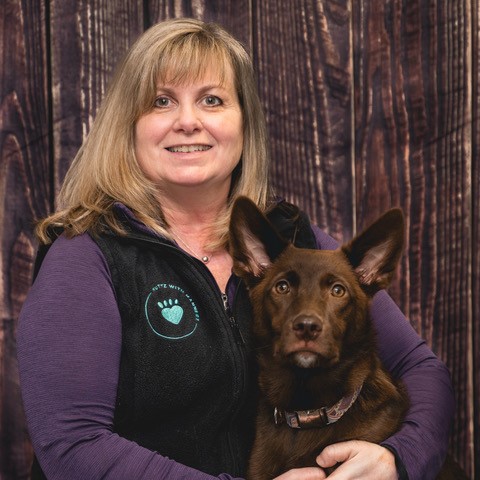
Corey McCusker, CPDT-KA, Licensed Family Dog Mediator®
Corey McCusker, CPDT-KA, LFDM, is the founder of Muttz with Mannerz Canine Training Academy in Stouffville, Ontario. She specializes in enrichment-based daycare, positive-reinforcement training and family dog mediation, helping dogs and their people build lasting, trusting relationships through science-based, welfare-focused methods.

Dogs looking for homes
Without a doubt, a dog is a real friend. Our dogs come in all shapes and sizes and they all have one thing in common — they all need loving forever homes.
Open your heart and home to a rescue dog. You’ll be glad you did.
October is Adopt-a-Dog month so we’re doubling the spotlight!
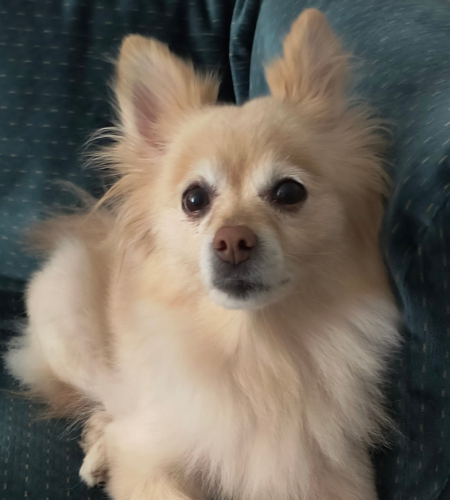
Jag, the cuddly tissue-shredder
Jag is a beautiful little Pomeranian mix who is 8 years old, 15 pounds, spayed, house and crate trained. Her coat is cloud-soft and has shown no tendencies to mat so she always looks silky and smooth.
Jag would do best in a quiet household with a person who is home most of the time. She is well-behaved in the home and not destructive. But she loves to shred any tissues she finds! True to her breed mix, Jag is very sensitive to noises she hears while inside and outside the home. She will alarm bark when startled by random noises and it can take her a bit of time to regain her calm. As a result, Jag needs a detached home with a private, fully fenced yard.
She is low-energy, liking outside but mainly sniffing the grass rather than walking very far. She’s generally fine with passing cars and people who don’t try to approach her, but she barks at other dogs and is not eager to befriend any. She has also never lived with another dog or cat, so she’d do best as the only pet in the home.
Jag will bark at visitors and it takes time for her to feel comfortable with new people. But once she’s comfortable, she loves to cuddle and is happiest when sitting with her people on the couch with hands stroking her. An adult-only home where her routines are calm and predictable would best bring out her sweet personality.
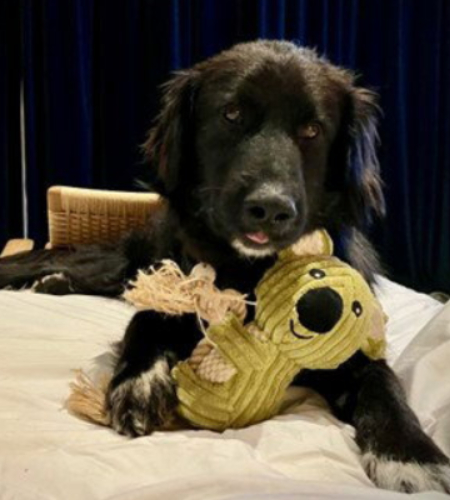
Karti, the jolly goofball
Karti is an approximately three-year-old neutered male who weighs roughly 50 pounds. He looks very much like a flat-coated retriever, however, he came to us as a street dog without any known backstory. He’s a jolly, lusty, rough-and-tumble fellow, with a huge appetite for life. And he’s fully housetrained.
Karti’s left hind foot was badly injured prior to being found, perhaps from a car accident. As a result, two of his toes were amputated and he now wears a prosthetic boot to prevent him from walking on his knuckles. This doesn’t stop him though! He loves his long walks. But his new family will need to keep his nails trimmed and put on and take off his sock and boot every day.
Karti is extremely affectionate and loves to cuddle — his favourite pastime is snuggling on the couch with his foster family. He’s generally good with both people and dogs, especially when introduced off-leash in a safe, secured area. He can, however, be suspicious of men carrying large objects or wearing hats or hoodies, and while on-leash he can sometimes become reactive with other dogs. He’s shown progress over the last few months though and is becoming less reactive.
Like many young dogs with big hearts and even bigger energy, Karti sometimes gets a little too excited. A certified positive reinforcement trainer can help get his “simmer down” or “off” button reliably working for him in a few sessions.
Karti’s ideal home would be in a house with a fenced-in area and a family with some rescue dog experience and lots of love to share. A home with no cats and no other dogs where he can be the centre of attention.
If you’re looking for your new best friend, Jag or Karti may be the dog for you!

The long and short of nail trims
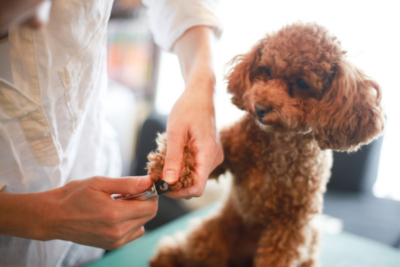
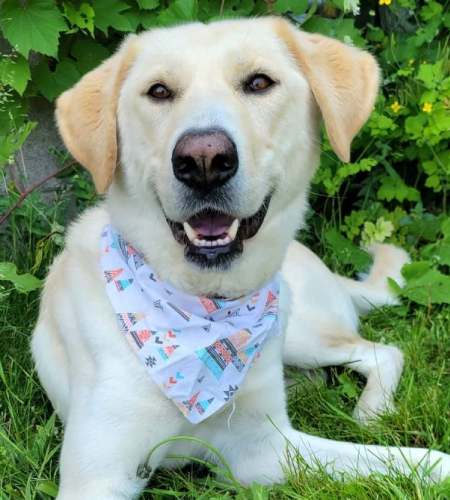
Photo credit: Alfo images via canva.com
Keeping your dog’s nails at an appropriate length can be a stressful experience for both dogs and dog parents. The truth is, most dogs who walk regularly on sidewalks and pavements don’t need frequent nail trims, since the pavement acts as a natural filing device. If your dog is a senior or not as active, however, it’s important to maintain regular nail trims to support mobility and avoid unnecessary pain for your dog.
But if you’ve got a squirmy dog, your dog has dark nails or you’re just too unsure of your ability to do it correctly, you might want to visit an experienced professional groomer for a nail trim.
The long and short of it
Dog’s nails contain quicks. This is the living inner core of the nail that contains blood vessels and nerve endings. The quick supplies blood, nourishing a dog’s nail tissue to keep their paws healthy, and provides sensation to help your dog feel pressure and touch. As a dog’s nails grow longer, so does the quick inside. On a dog with clear or white nails, you can see the quick — it is the visible pink core. But on a dog with dark nails, the quick is hidden, making it more difficult to trim your dog’s nails safely. For a dog with dark nails, it’s best to trim very carefully in small amounts or look at the underside of the nail for a tiny dark dot marking the centre.
What happens if you mistakenly cut the quick
- Intense, sharp pain: your dog will feel an immediate jolt of pain because the quick is living tissue, unlike the hard outer nail shell.
- Bleeding: because the quick has a rich blood supply, the nail will bleed actively and profusely right after it’s clipped.
- Fear and anxiety: A single painful experience can make your dog terrified of future nail trims, causing them to pull away, shake or act defensively.
- Infection risk: An open, bleeding quick can pick up dirt and bacteria from the ground, which may lead to swelling or infection if the paw is left unprotected.
How to help a bleeding nail
If you happen to nick the quick, it’s important to:
- Stay calm: Keep your voice soft so your dog does not pick up on your stress.
- Stop the bleeding: Press styptic powder, cornstarch or clean flour against the tip of the nail with gentle pressure until the bleeding stops.
- Keep it clean: Prevent your dog from licking the paw and keep them off dirty surfaces until the wound seals. You may need to use a sock or bootie to prevent them from licking.
Bringing it all together
When it comes to your dog’s nails, a little care can go a long way to keeping your pet comfortable, confident and on the move. Knowing where the quick is — and what to do if you accidentally nick it — can help you stay calm and respond quickly. And there’s no shame in leaving nail trims to the professionals. If you or your dog find the experience stressful, a trusted groomer can help keep those paws healthy without the worry. After all, happy paws mean more comfortable walks, playtime and adventures together.
Happy tails (recent adoptions)
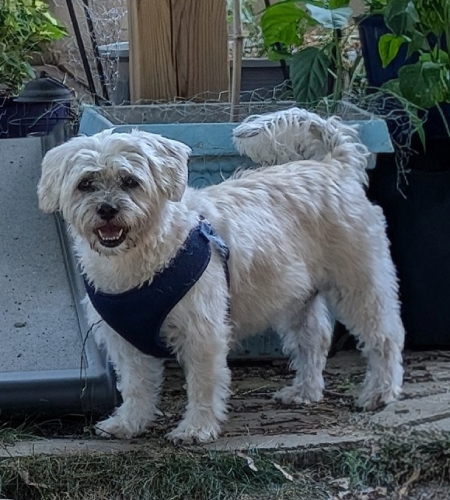
Bella
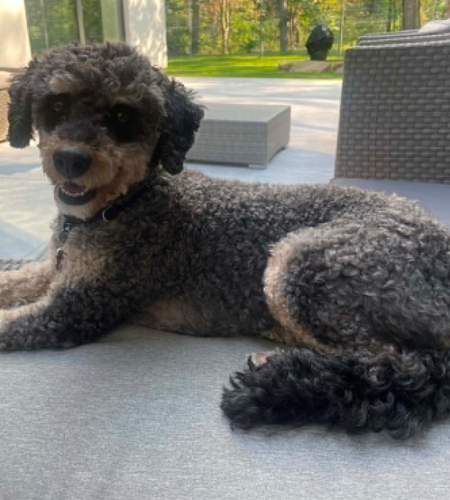
Lola
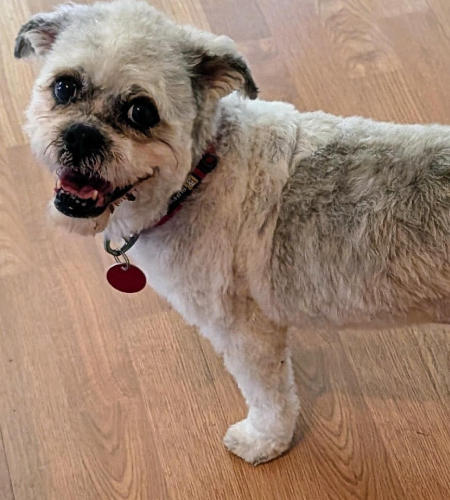
Dina
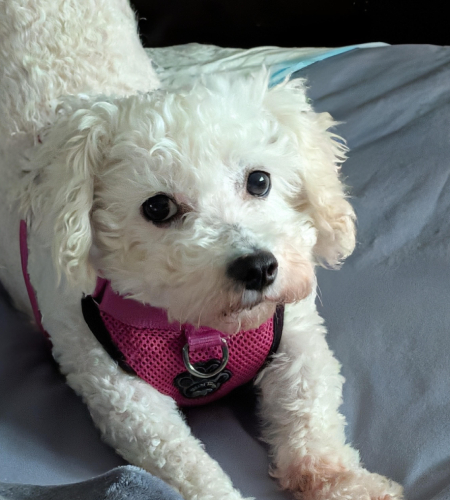
Maggie
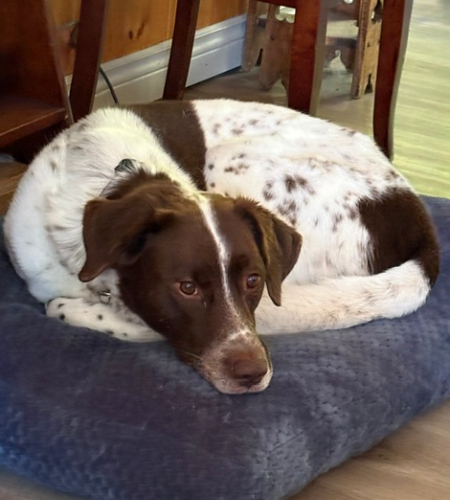
Moose
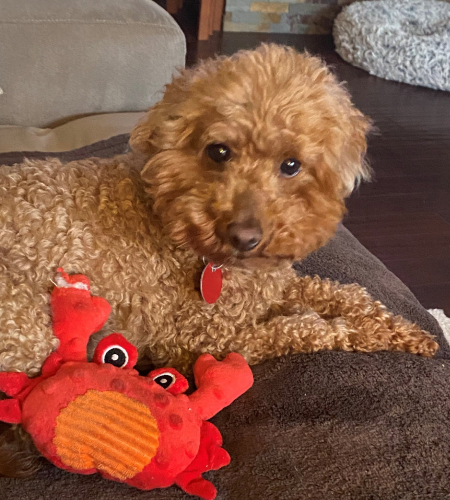
Rose
Blackie’s Fund

Every dollar donated in October will be matched up to $15k by a generous donor!
Help us help dogs by donating at www.speakingofdogs.com/donate or by e-transfer to rescueprogram@speakingofdogs.com.
All donations of $20 or more will receive a tax receipt.
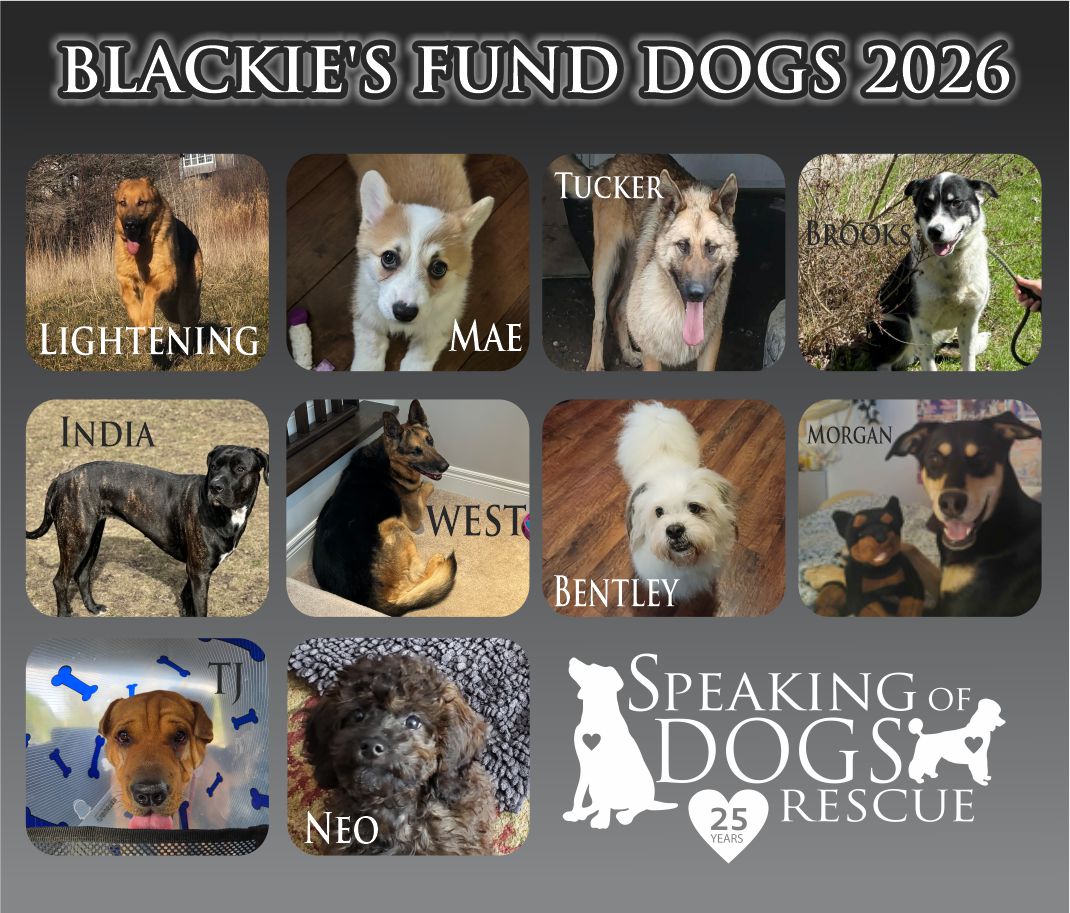
Here’s how Blackie’s Fund has helped over the past year:
- Bentley: covered vet care for intense itchiness when his owner couldn’t afford it.
- Brooks: found as a stray in a small, rural area and needed spay surgery.
- India: spay, bloodwork, vaccines and allergy treatment in preparation for adoption.
- Mae: covered parvo treatment for this puppy whose owner couldn’t afford it.
- Millie: bloodwork, microchip and vaccines in preparation for adoption.
- Morgan: spay, vaccines, anti-anxiety meds and positive reinforcement training in preparation for adoption.
- Neo (Leo): covered prolapsed rectum surgery for this puppy.
- Nick: covered neuter surgery, as owner was homeless and trying to find him a home.
- TJ: neuter, vaccines and entropian surgery to correct a very painful eye issue.
- Tucker: we sponsored him when another rescue reached out to us to have a mass removed.
Adoption update
Dear Speaking of Dogs Rescue,
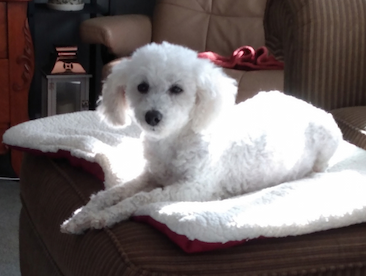
Sophie is a 6-year-old puppy mill survivor who was saved by Speaking of Dogs. Sadly, after being rescued, she was diagnosed with two types of mammary gland cancers — one quite aggressive. When we first got her, she was extremely timid and frightened of everything, but she quickly learned the ropes from our dog Abbie, and it didn’t take her long to trust us.
Now she loves going for long walks, enjoys cuddles on the couch and sleeping snuggled into us at night. She is an incredible symbol of resiliency and hope, and remains a forgiving, gentle soul full of love and gratitude, despite her terrible start in life. She is such a happy girl now, and I think it’s because she remembers what her life was like before. While her prognosis is only one to two years, she has already outlived her first cancer diagnosis, and we are hopeful she will also outlive the second. At the very least, we will make sure she has the best life for whatever time she has.
Sincerely,
Mary Ann Bernier
Wiggles and wags

Donation drive
Big thanks to Petopia Doggie Daycare & Resort for holding a donation drive for our rescue! They collected so many wonderful donations including snuffle mats, collars, leashes, toys and treats. Petopia also fostered two puppies, Tutti and Duffy, for us earlier this year.
Celebrating 25 years of volunteers
Thank you to all the people who have volunteered with us over the last 25 years. We couldn’t have done it without you!
Watch our video to see some of the faces of our rescue

Want to help our dogs?
Consider making a donation from our Amazon wish list of priority dog supplies.

In memoriam
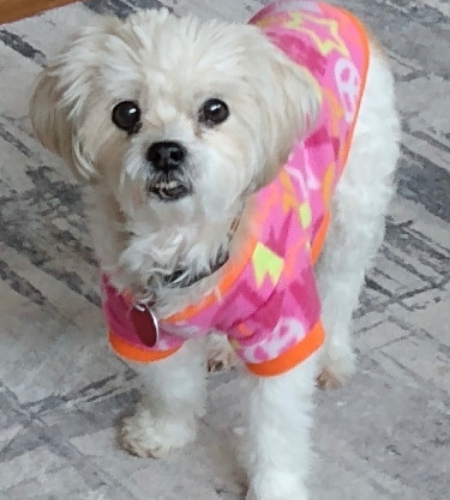
Honey
Forever in Foster
Loved by Mary Ann Bernier, Ian Buffett, Abbie and Sophie
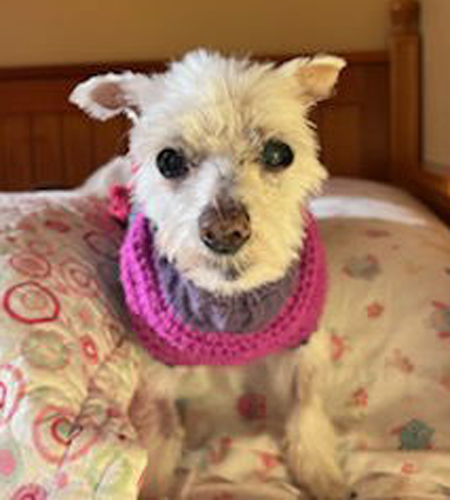
Jasmine
Forever in Foster
Loved by Anni and Joe Schwarzenberg
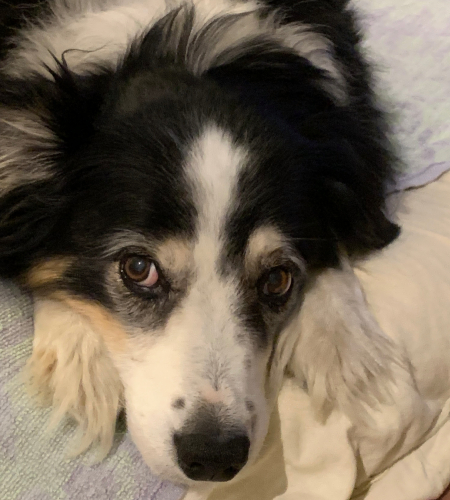
Maya
Adopted June 2020
Loved by Gillian Holden
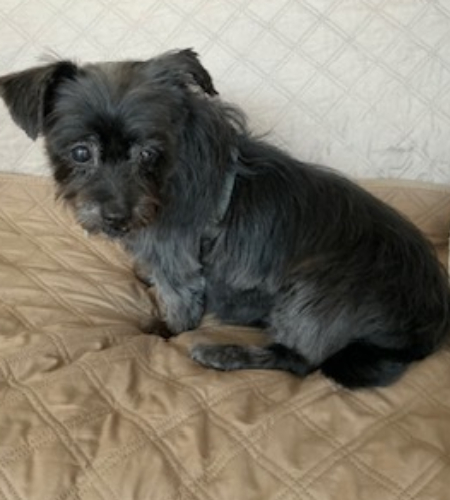
Piper
Forever in Foster
Loved by Karen Grasley
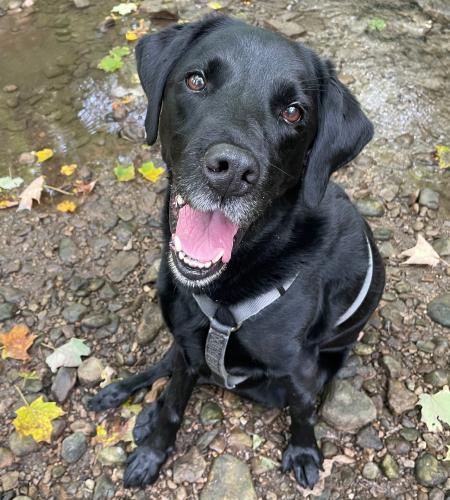
Rikki
Adopted February 2014
Loved by Mie Suzuki and Robert Pinder
Ruby
Foster
Loved by Samantha Gravelle
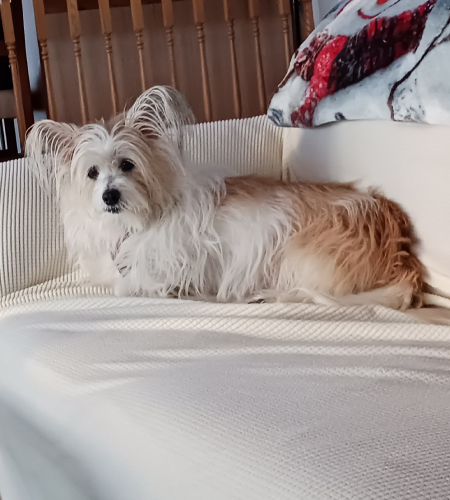
Skylar
Adopted April 2017
Loved by Karen Anderson-Legge
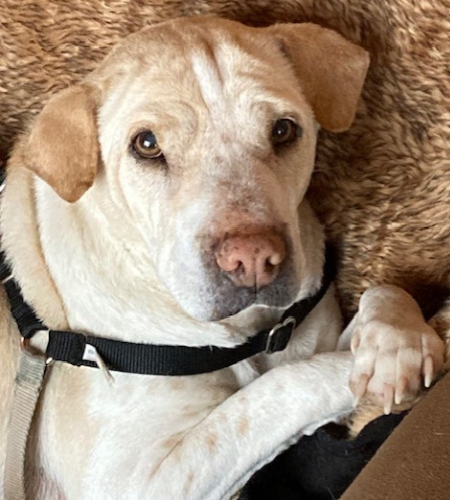
Toby
Adopted October 2022
Loved by Louise and Robyn Coutu
About Speaking of Dogs
Speaking of Dogs Rescue Program is a Canadian registered charity established in the Greater Toronto area with foster homes across Ontario. Launched in 2001, we are a foster-based, all breed rescue with a focus on senior dogs. We are run solely by volunteers with a mission to help homeless dogs in need by providing shelter or sanctuary, necessary medical care, adoption and education.
Newsletter team
Contributors: Lorraine Houston, Kim Gladding and Corey McCusker
Editor and Design: Michelle Colasuonno
Contact
P.O. Box 8058
RPO Hurontario
Collingwood, ON L9Y 0H1
705-444-SODR (7637)
speakingofdogs@gmail.com
speakingofdogs.com
Newsletters
If you no longer want to receive our newsletter, email news@speakingofdogs.com with “unsubscribe” written in the subject line.